
Tree Root Damage to Foundations & Pipes in London, Ontario
- Out on a Limb Tree Experts

- May 15
- 5 min read
London’s incredible canopy makes the "Forest City" beautiful, but it also hides a costly threat. Beneath your lawn, tree roots constantly hunt for water, often targeting your home’s plumbing and foundation.
If you own property in London, Ontario, understanding this hidden danger is vital. The condensation pooling around your foundation and the warm wastewater flowing through your pipes create the perfect survival oasis for thirsty trees. Catching this underground invasion early can save you tens of thousands of dollars and prevent a total property excavation.
How Tree Roots Invade Pipes and Concrete
To protect your property, you need to understand how trees hunt for water. Trees rely on hydrotropism—meaning their roots grow directionally toward the strongest moisture source. During Southern Ontario’s dry summer months, thirsty roots stretch far beyond their visible canopy to survive.
The Attack on Your Plumbing
Underground sewer lines hold a continuous flow of water, oxygen, and nutrients. But how do soft roots penetrate solid pipes?
Many of London’s established homes rely on aging vitrified clay or cast-iron sewer laterals. Over decades of freeze-thaw cycles, the ground shifts, loosening pipe joints and creating microscopic hairline fractures. When warm wastewater escapes through these cracks, roots detect the moisture and grow directly toward it.
Once hair-like root fibers slip inside the pipe, they hit the jackpot. Fueled by endless water and fertilizer, they rapidly expand into dense, impenetrable masses. This leads to severe clay pipe root invasion, resulting in crushed lines and raw sewage backing up into your basement.

See how Jetterman Plumbing uses advanced CCTV cameras to spot early-stage root intrusion
The Threat to Your Foundation
Many homeowners mistakenly believe roots act like jackhammers, violently punching through concrete. In reality, structural damage usually stems from root-induced soil subsidence.
Southwestern Ontario soil contains heavy clay, which expands when wet and shrinks when dry. A mature tree acts like an industrial water pump, drawing hundreds of gallons of moisture from the earth daily. During a dry spell, this aggressive extraction causes the clay beneath your foundation to shrink and pull away.
Lacking support, the heavy concrete settles, shifts, and eventually cracks. Once a fracture forms, roots eagerly wedge their way inside, widening the gap and opening the floodgates for water ingress.
5 Early Warning Signs of Root Damage
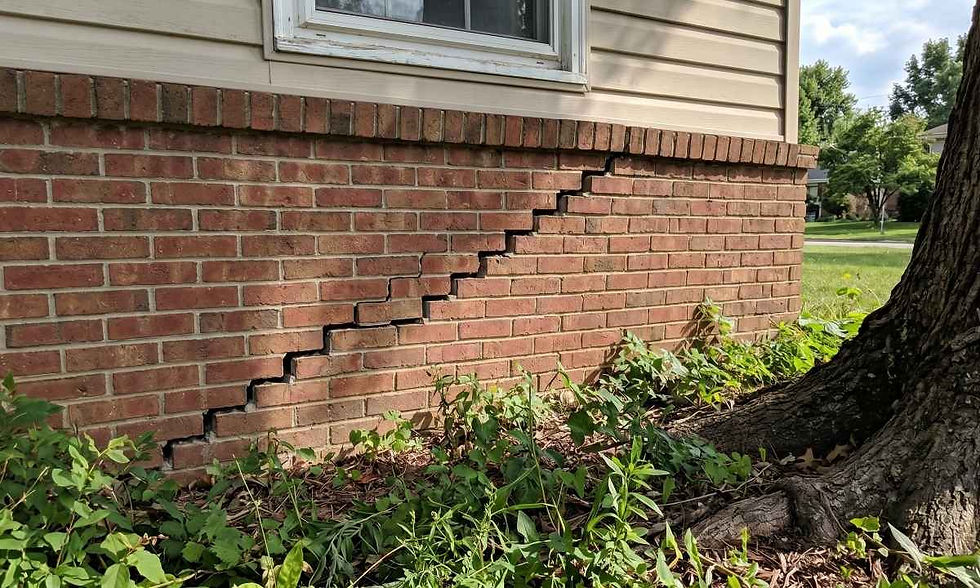
Early detection is your best financial defense. Because the destruction happens out of sight, you must monitor your home for secondary symptoms. If you notice any of these signs of tree root damage, you need immediate professional intervention:
Widespread Slow Drains: A single clogged sink is a local issue. If every drain in your house is sluggish, roots are likely choking your main sewer lateral.
Gurgling Fixtures: Root masses trap air inside your pipes. When you flush a toilet, that trapped air pushes back up, creating a distinct gurgling sound in the bowl.
Unusually Lush Lawn Patches: Notice a bright green, rapidly growing patch of grass during a dry August? A broken, leaking sewer line is likely fertilizing it from below.
Widening Foundation Cracks: While static hairline cracks are normal in aging concrete, actively widening vertical or "stair-step" diagonal cracks indicate severe soil subsidence.
Sticking Doors and Sloping Floors: If interior doors suddenly bind or fail to latch, your foundation has shifted and pulled your home's wooden framing out of square.
High-Risk Trees in Southwestern Ontario

Not all trees pose the same threat. Slow-growing species with deep taproots are generally safe. However, fast-growing shade trees develop aggressive, shallow root systems. If you spot any of these worst trees for foundations on your property line, monitor your infrastructure closely:
Silver Maples: Historically planted for rapid shade, these trees feature incredibly aggressive, shallow roots that easily lift driveways and infiltrate clay pipes.
Weeping Willows: These water-loving giants thrive near riverbanks. In a suburban yard, they will aggressively hunt down your sewer line or septic bed.
Poplar Trees: Poplars grow incredibly fast and require massive amounts of water, causing rapid soil subsidence and fast-tracking foundation settling.
Elm Trees: Elms possess deep, wide-reaching roots thick enough to physically displace compacted soil and crush weakened plumbing pipes.
Remediation: Plumbers vs. Arborists
Once you confirm a root invasion, resolving it permanently requires a synchronized, dual-trade approach. You must restore your water flow and eliminate the biological source.
Phase 1: The Plumber (Diagnostics and Restoration)
If your drains are backing up, skip the toxic, store-bought chemical drain cleaners—they won't dissolve thick roots and will only damage your pipes further. Instead, call a licensed plumber.
Camera Inspections & Hydro-Jetting: A technician will feed a high-definition CCTV camera into the line to pinpoint the breach. They will then use highly pressurized water (hydro-jetting) or a mechanical auger to chop through the root mass and restore flow.
Trenchless Pipe Repair: Today, you don't always need an excavator to fix a root-destroyed pipe. Using Cured-In-Place Pipe (CIPP) lining, a plumber can cure an epoxy-saturated sleeve directly inside the damaged line, creating a seamless, root-proof barrier without destroying your landscaping.
Phase 2: The Arborist (Source Control)
Clearing the pipe treats the symptom; managing the tree cures the disease. If you leave the tree alone, the roots will return.
Strategic Mitigation: A certified arborist can safely excavate and prune offending roots without killing the tree. If the tree is too close to the home or heavily diseased, full removal may be necessary.
Navigating Local By-laws: The City of London enforces a strict Tree Protection By-law. You generally need a permit to alter or remove any tree with a trunk diameter of 50 centimeters or greater. An arborist will manage the municipal red tape, submit the required reports, and execute the removal legally.
Consult Out on a Limb Tree Experts for legal root mitigation and arborist reports in London
Proactive Prevention Strategies
The cheapest way to handle tree root removal in pipes is to prevent the intrusion altogether. Follow these proactive steps to safeguard your home:
Plant Smart: Always research a tree's mature height and root spread. Plant trees at a distance from your foundation equal to their expected mature height.
Schedule Routine Inspections: If you live in an older, heavily treed neighborhood, schedule a plumbing camera inspection every two years. Catching tiny root hairs early allows a plumber to hydro-jet the line before a solid mass forms.
Control Soil Moisture: Ensure the soil grading around your foundation slopes downward and away from the house. By directing rainwater away from the foundation, you remove the primary incentive for roots to grow toward your home.
Don't wait for a backed-up sewer line to destroy your basement or a fractured foundation to compromise your home's safety. Take action today to protect your property and your wallet.


Comments