
The Ultimate Guide to Getting an Arborist Report for Tree Removal in St. Thomas
- Out on a Limb Tree Experts

- Mar 16
- 4 min read
Got a dead, hazardous, or awkwardly placed tree on your property? Put down the chainsaw. Removing a mature tree in St. Thomas without the correct documentation triggers hefty municipal fines and immediate legal headaches.
The City of St. Thomas enforces strict tree protection by-laws to maintain the urban canopy. To legally remove a significant private tree, you must secure a municipal permit. To get that permit approved, the city requires a formal arborist report.
If you are wondering how to get an arborist report for tree removal in St. Thomas, this guide has you covered. We break down the city's regulations, explain the contents of a professional report, and outline a clear step-by-step process to secure your permit legally and efficiently.
St. Thomas Tree Protection By-Laws Explained
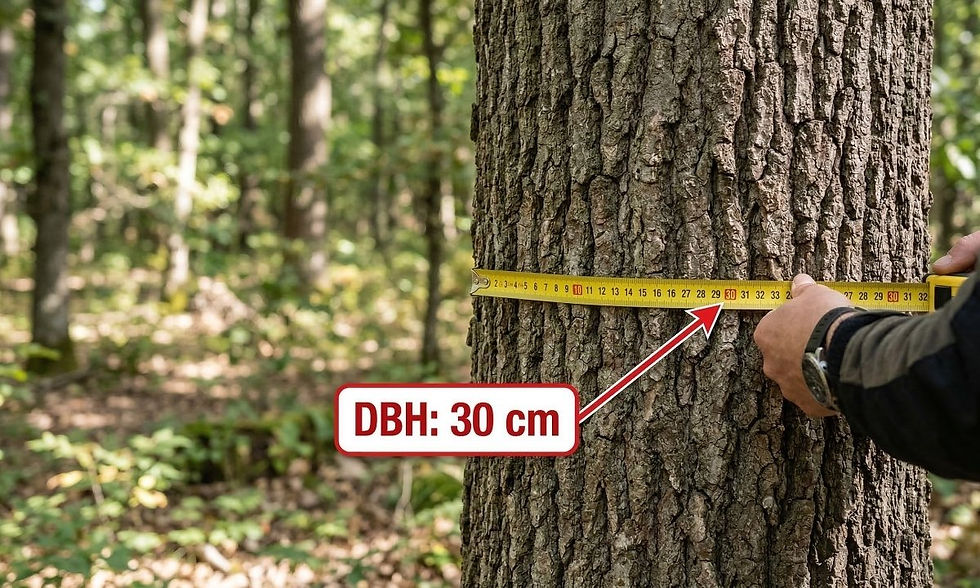
You must understand the rules before making a single cut. The municipality strictly enforces the City of St. Thomas Municipal Tree Preservation By-law to protect the local environment.
Tree size dictates the most critical rule for property owners:
The 30 cm Rule: Does your tree have a trunk Diameter at Breast Height (DBH) of 30 centimeters (about 12 inches) or more when measured 1.3 meters from the ground? If yes, you legally need an official private tree permit in St. Thomas to remove or significantly alter it.
Municipal Trees: Does the tree sit on a property boundary line, or does 60% or more of the trunk base rest on city property (like a boulevard)? The city classifies this as a municipal tree. You cannot alter these trees yourself; you must contact the St. Thomas Forestry Division directly.
Elgin County Regulations: Properties bordering the outskirts of St. Thomas or sitting in designated woodland areas often fall under broader Elgin County tree protection rules.
Attempting to bypass these by-laws results in immediate stop-work orders and fines that easily exceed the cost of doing the job legally.
What Is an Arborist Report and Why Do You Need One?

The city will not simply take your word that a tree needs removal; officials require documented proof.
An arborist report is a technical document prepared by an objective, certified tree care professional. It details the precise location, species, size, and health condition of the tree. The city relies exclusively on this document to evaluate your removal request.
A valid removal report typically hinges on one of these criteria:
The tree is completely dead or in an irreversible state of decline.
The tree suffers from a severe disease or pest infestation, such as the Emerald Ash Borer.
The tree poses an active, immediate hazard to structures, power lines, or human life.
The root system causes documented, irreversible damage to foundational infrastructure.
What Does a Certified Report Include?
When an ISA-certified arborist in St. Thomas prepares your document, they provide:
Site Map: A scaled drawing pinning the tree's exact location relative to property lines.
Photographic Evidence: Clear images showcasing decay, structural defects, or hazardous growth.
Tree Hazard Assessment: A formalized risk evaluation.
Mitigation Plans: Recommendations for replacing the canopy. The city frequently requires you to plant a new tree as a condition of removal.
5 Steps to Secure Your Tree Removal Permit Fast
Navigating municipal red tape is simple when you follow this streamlined process.
1. Measure the Tree Wrap a standard measuring tape around the trunk exactly 1.3 meters (about 4.5 feet) from the ground. Divide that circumference by 3.14 (pi) to find the diameter. If it equals 30 cm or larger, you need a permit. If it is smaller and sits entirely on your property, you are generally in the clear.
2. Hire a Qualified Professional You cannot write this report yourself. The city requires a local, ISA-certified arborist. Hiring a professional who operates locally ensures they understand the specific expectations of the St. Thomas urban forester.
3. Schedule the On-Site Evaluation Your arborist will visit your property to conduct a physical examination. They inspect the canopy for deadwood, check the trunk for cavities, evaluate the root flare, and identify potential fall hazards.
4. Generate the Report The arborist compiles their findings into the city's mandatory format. This document clearly states their professional recommendation: complete removal, aggressive pruning, or disease treatment [Internal Link: Link to your Tree Pruning/Treatment services page].
5. Submit the Application File your tree removal permit application. Submit the Application to Injure or Remove/Destroy a Tree and your newly minted arborist report to the Parks, Recreation and Property Management Department (often processed through the Pinafore Park Office) or email it directly to the city's urban forester.
How Much Does an Arborist Report Cost in Elgin County?
Budgeting for tree removal means calculating both physical labor and administrative fees.
Arborist Report Costs: A standard residential arborist report in St. Thomas typically costs between $300 and $600+. Prices fluctuate based on the number of trees and site complexity.
City Permit Fees: The City of St. Thomas charges an administrative processing fee. The base fee currently sits at $100 to remove fewer than 10 trees [External Link: Link to City of St. Thomas fee schedule].
Crucial Exemptions: The city frequently waives or refunds permit fees if your arborist report conclusively proves the tree is dead, severely diseased, or poses a critical hazard.
What Happens After You Submit Your Application?

Once you hand your application to the St. Thomas forestry division, the urban forester reviews the documentation. A city official may also visit your property to verify the findings. Expect this review process to take anywhere from a few days to two weeks.
Once you receive the approved permit, you are legally cleared to cut.
To save time and eliminate stress, hire a full-service tree care company from day one. A crew equipped to write the certified report and safely dismantle the tree handles the entire project from the initial assessment to the final stump grinding in one seamless operation.
Don't Risk Fines - Do It Right the First Time
Illegal tree removal in St. Thomas triggers stop-work orders, minimum fines of $400, and legal mandates forcing you to pay the full appraised value of the destroyed tree.
Protect your property and your budget by playing by the rules. If you suspect a tree needs to go, let the professionals handle both the heavy lifting and the paperwork.
Contact Out on a Limb Tree Experts today. Our certified professionals conduct thorough on-site evaluations, provide comprehensive, city-approved arborist reports, and execute safe, efficient tree removals from start to finish.


Comments